
RUNNER RECOVERY
The Run Is Over. Why Does Recovery Still Feel Like Another Workout?
I love running.
I just never understood why the part after the run sometimes felt like another training session.
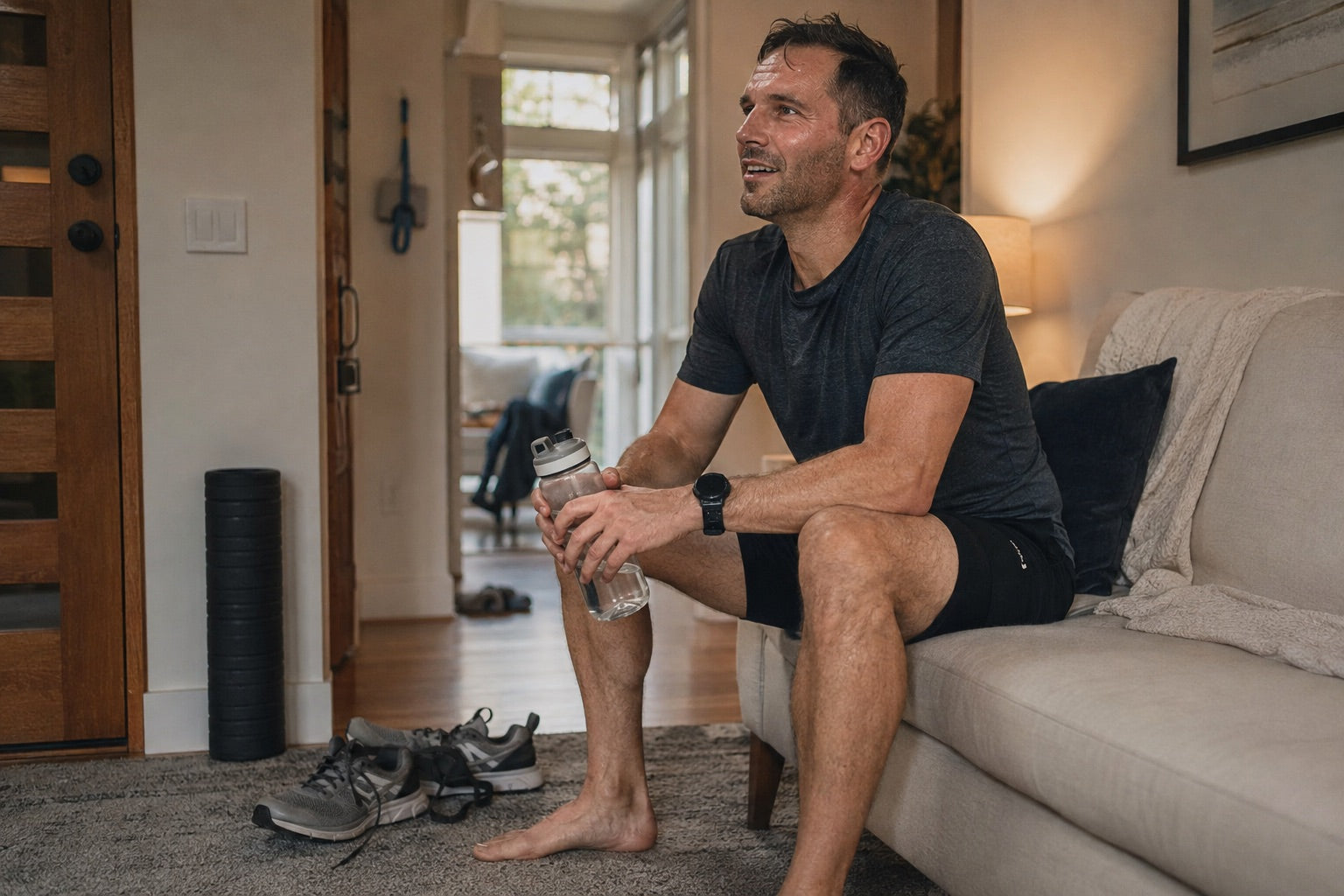
There’s a moment after a good run that I genuinely love.
You stop your watch. Catch your breath. Look at the distance. Maybe you ran a little farther than planned. Maybe the pace felt unusually easy. Maybe it was just one of those runs where everything clicked.
You get home feeling like you did something good for yourself. Shoes come off. Water. Shower. Food.
And then you feel it. Your calves are tight. Your legs have that heavy, worked feeling. Maybe your quads are starting to remind you about the hills.
Nothing dramatic. You just know your legs have been used.
But that isn’t how most runners train. I already knew what was coming next—because there was another run on the calendar.
That Was the Part I Never Really Thought About
Running isn’t one workout. It’s a rhythm.
I wasn’t trying to make sure my legs never felt worked. That would be unrealistic.
Because once you start running consistently, soreness isn’t annoying simply because it’s uncomfortable. It sits between today’s run and the next one. Sometimes those runs are only a day apart.
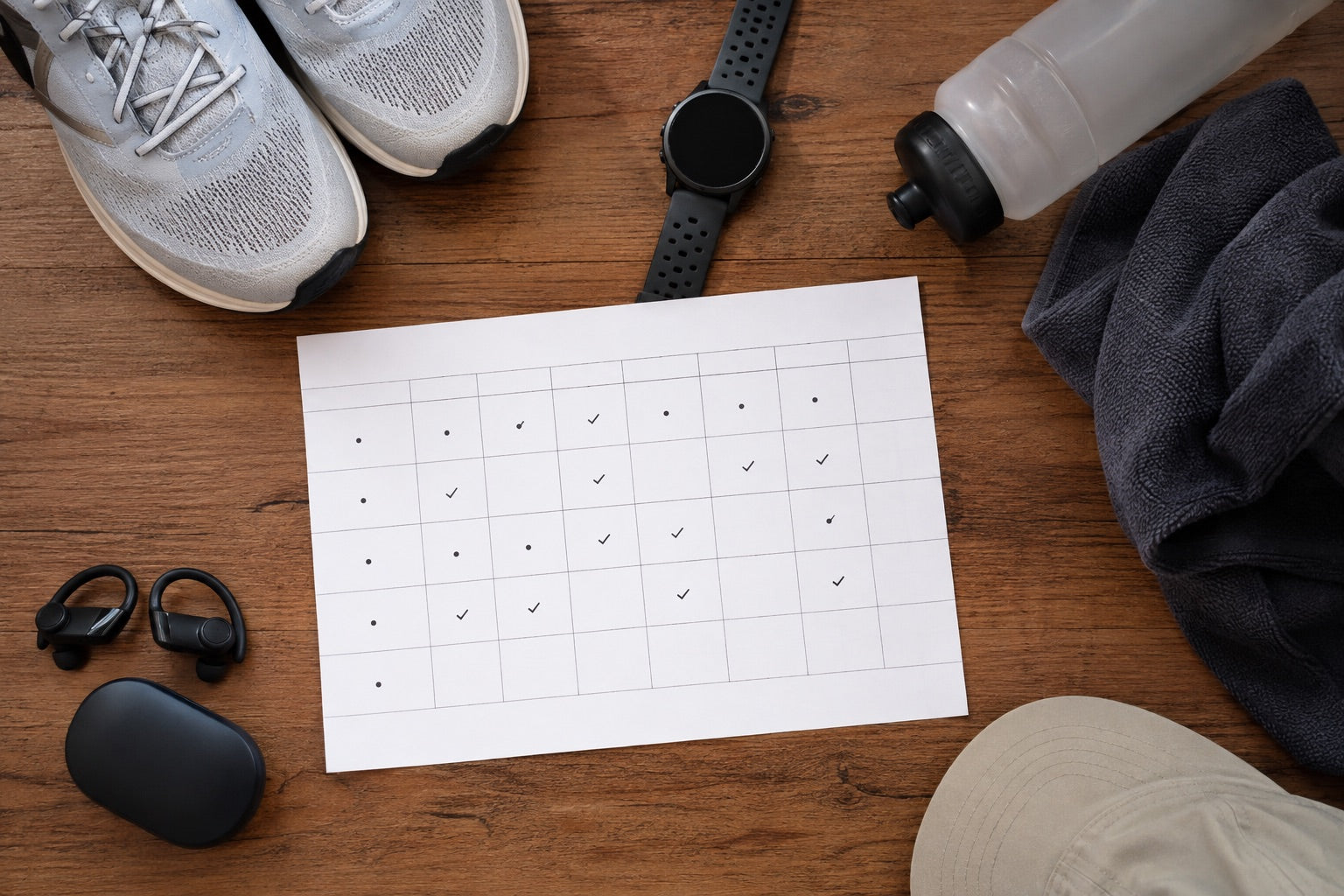
I Already Knew All the Recovery Advice
This is the funny part. I wasn’t confused about what runners are supposed to do.
- Stretch
- Hydrate
- Sleep
- Mobility
- Foam roll
- Massage gun
- Compression
- Walk around
I’d tried plenty of it, and some of it genuinely helped. This isn’t a story about discovering that everything runners have been doing for years is useless.
Foam rolling can feel good afterwards. Stretching has its place. Massage guns can be great for certain areas.
Knowing the perfect recovery routine and consistently doing it are two very different things.
My Foam Roller and I Had a Complicated Relationship
I knew I usually felt better after using it. That was never really the issue. The problem was the moment I had to use it.
“I hate foam rolling… However, I do it after every run, because I feel much better after it.”
Runner — market research
That contradiction made complete sense. You can believe something helps and still wish it required less effort.
Then There Was the Massage Gun
I bought one for basically the same reason everyone buys one. It seemed easier. And to be fair, it was.
Sit down. Turn it on. Work on the calf. Move to the quad. Find the spot. Keep moving it.
But after a long run, there were nights where even that somehow became something I needed to do. Hold the gun. Move the gun. Work both legs. Find the right angle. Do the other side.
And that is a completely different problem.
Because Runners Don’t Usually Need More Recovery Advice
We need recovery that fits between runs.
Runner A
Perfect 30-minute routine
Foam roll, mobility, stretch, massage gun
Only completes it sometimes
Runner B
Simpler routine
Fits Tuesday, Thursday and the long run
Realistically repeated
Maybe the best recovery routine is the one easy enough to become part of your training rhythm.
And Runners Understand Rhythm Better Than Almost Anyone
You don’t build running fitness from one huge run. You build it from consistency. Week after week. Run after run.
That’s why a missed run can bother you more than it probably should. It isn’t just “I missed 5 miles.” It feels like you interrupted something.
“I wanted to go for a run so bad.”
Runner — market research
That sentence says more about runner recovery than a hundred paragraphs of technical language. The real desire wasn’t zero muscle sensation.
Maybe the Goal of Recovery Isn’t to Make You Feel Nothing
Maybe the goal is simply to help you feel more ready for what comes next.
Recovery products are often marketed as faster, deeper, more powerful or extreme—as if the goal is to win a recovery competition.
My goal was to get up when the next run came around and think, “Yeah. I can run today.” Not to complete the most impressive post-run protocol possible.
Why Was Recovery Still Asking So Much From Me?
Running already required discipline. Wake up early. Get dressed. Go outside when the weather isn’t perfect. Do the miles. Finish the workout.
Recovery was supposed to support that. Yet somehow it kept becoming another item on my training checklist.
That was the cycle. And the more frequently I ran, the more obvious it became.
So I Stopped Asking “What’s the Best Recovery Tool?”
And started asking:
I didn’t necessarily need the strongest, deepest, most expensive tool or the longest feature list. I wanted something useful, easy to start, and compatible with the part of the evening where I was already sitting down.
Then I Realized Almost Every Recovery Tool I Owned Had Something in Common
A foam roller presses into the muscles. A massage gun repeatedly applies pressure and percussion. Massage? Pressure again.
That’s completely fine. But is more downward pressure the only way to work on tight, overworked legs? Apparently not.
There’s another approach that works mechanically in the opposite direction. Instead of pressing into the body, it uses suction to create negative pressure: cupping.
A Different Mechanical Approach.
Most recovery tools press down. SmartCup lifts.
Different mechanics—not a claim that one approach is medically superior.
And My First Reaction Was Basically: “Really?”
Cupping Always Seemed Like One of Those Things
Some people swear by it. Other people think it’s complete nonsense. I had no interest in replacing one recovery gadget with another because somebody promised me a miracle.
The research around cupping isn’t a reason to pretend otherwise. The evidence is mixed. Some studies report short-term benefits in certain contexts; others have important limitations. General cupping research is not proof that every device will make you recover faster.
Massage guns and rollers apply force toward the body. Cupping uses negative pressure. The suction draws the skin and superficial tissue upward into the cup.
Not “better.” Not “magic.” Just different. And for someone who already owned the usual recovery tools, different was interesting.
But Traditional Cupping Had an Obvious Problem
It didn’t exactly scream “easy routine after tonight’s 6-mile run.”
Another recovery method that might be useful—but came with more friction. Which was the exact problem I was trying to solve.
And that’s when I came across a modern version of the idea that came down to three things:
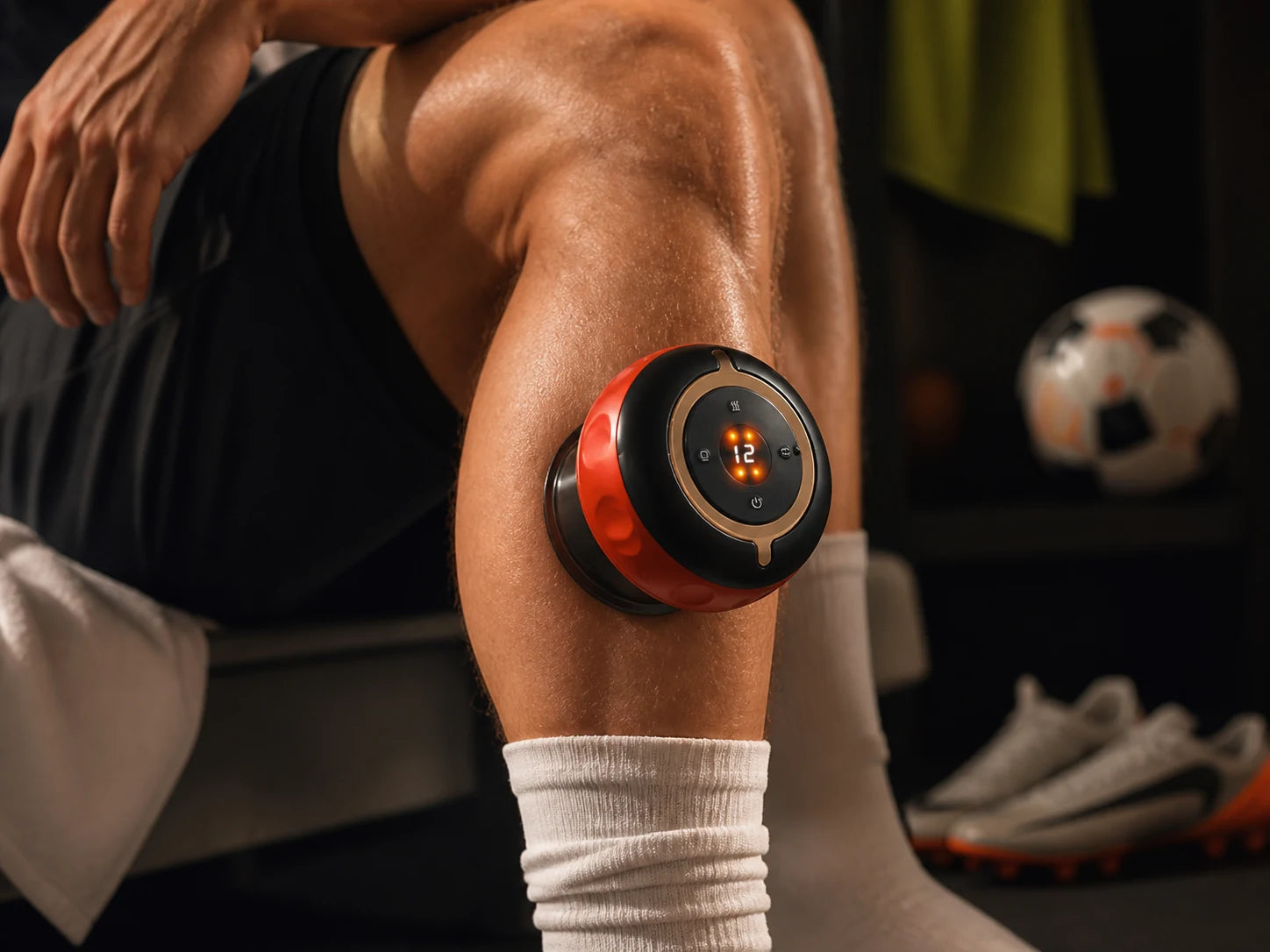
ACTIVE RESET SMARTCUP™
The Version I Found Wasn’t a Bag of Cups
It was one small, rechargeable device.
The product I came across was called Active Reset SmartCup™. At first glance, it almost looked too simple. No pump. No tubes. No complicated setup. Just a compact electric cup that creates adjustable negative pressure.
Place it on an appropriate muscular area. Choose the level. And once it’s in position, you can sit down.
That last part got my attention. I didn’t have to roll it, keep moving it or hold it against my calf. The device stayed there. Suddenly, using something after three or four runs every week felt more realistic.
See How SmartCup Works →This Wasn’t About Finding the “Strongest” Recovery Tool
SmartCup has adjustable suction levels. But the point isn’t to turn it as high as you can tolerate.
If something is pulling against your skin, I want to be able to control it. Start gently. Find a setting that feels comfortable. Adjust from there. Stronger doesn’t automatically mean better.
Temporary suction marks can happen. Some people don’t like the sensation, and different areas can feel different. Start low, find your level, and follow the official product instructions.
Then I Tried to Picture the Actual Post-Run Moment
Not the product photo. Not the marketing. The real moment.
I get home from a run. Shoes off. Water. Shower. Maybe eat something. My calves have that tight, worked feeling. Normally that’s where the negotiation starts: “Should I foam roll?” “Maybe later.” “I should stretch.”
Place It.
Set It.
Let It Work.
That’s basically the routine. I could use it while sitting down, watching TV, answering messages, looking at tomorrow’s route or doing absolutely nothing.
The biggest advantage might not be what SmartCup makes me do. It might be how little it asks me to do.
That’s Why “Reset in 10” Started to Make Sense
RESET IN 10
A simple 10-minute post-run ritual.
It does not mean your legs are completely recovered in ten minutes, that you’ll never feel sore, or that ten minutes guarantees tomorrow’s run.
It means: take ten minutes and make recovery part of what you already do after training.
- RUN
- SHOWER
- SMARTCUP
- TAKE 10
That’s something I could picture repeating. And in running, repeatability matters.
Because the Real Question Was Never “Can This Make Me Never Feel Sore?”
That would be ridiculous. If you run hard enough, your legs are going to know you ran—especially after a long run, hills, faster work, a higher-mileage week or coming back after time off.
I wasn’t trying to erase every signal that I’d trained. The more practical question was: “Can I build an easier recovery habit around the days my legs feel especially worked?”
SmartCup made sense not as the one thing that fixes runners, but as one simple option for moments when I don’t feel like doing more.
A CAREFUL NOTE ON RESEARCH
“But Is Cupping Actually Legit?”
Cupping has been studied for pain-related outcomes and in athletic populations. Some studies and reviews report positive short-term findings, but the overall evidence is mixed and many studies have limitations.
Research on cupping generally is not clinical proof that Active Reset SmartCup specifically will make you run faster, recover faster or perform better. Research findings relate to cupping generally, not specifically to Active Reset SmartCup™.
The practical argument is smaller: it works mechanically differently from the tools I already own, gives me control over intensity, can stay in place while I relax, and looks simple enough to become part of my routine.
And the More I Read Runner Conversations, the More That Point Kept Showing Up
Runners don’t finish a run and say, “I require optimisation of physiological recovery markers.”
The recovery routine only has value because of what comes after it: the next morning, the next pair of shoes, the next route, the next run.
The Runner’s Real Problem Isn’t “Soreness”
It’s losing rhythm.
One missed run isn’t the end of the world. But runners know how momentum feels. You get into a groove. You start stacking weeks. Three runs, then four. Mileage slowly comes up. Your long run gets longer.
Heavy legs are frustrating not simply because a calf feels tight, but because “I was supposed to run again tomorrow.”
Today’s run affects the next run. The next run affects the week. The week affects the training rhythm. The goal isn’t perfection. It’s continuity.
VERIFIED ACTIVE RESET REVIEWS
From Runners and Active Customers
“My calves tend to feel very worked after longer runs. Active Reset SmartCup™ is simple enough that I actually use it instead of putting recovery off until later.”
“I expected it to be more complicated than it is. The controls took about a minute to figure out. I use it mainly on my quads and calves and it fits into my routine really easily.”
“I had used basic cups before but this feels much more convenient. Being able to adjust the suction and add warmth makes the whole session feel more controlled.”
Which Is Why SmartCup Doesn’t Need to Replace Anything
If you genuinely enjoy foam rolling after every run, keep doing it. If your massage gun lives beside the sofa and you use it constantly, great. If stretching or compression is already part of your routine, nothing about SmartCup means you have to stop.
I wouldn’t think of this as SmartCup versus every recovery method. I’d ask: what do I reach for on the days I want something easier?
Some nights that might be stretching, walking or the roller. And some nights? Shoes off. SmartCup on. Feet up.
THE TWO-SIDED RUNNER SETUP
Then I Understood Why Two Cups Made More Sense for Runners
When I first saw the bundle options, my immediate thought was: “Why would I need two?” Then I looked down. Two legs. Obvious.
One cup means one side, reposition, then the other side. Two cups means:
Two calves. Two cups. One reset.
Your legs ran together. Two cups can be used at the same time, with less repositioning and less waiting.
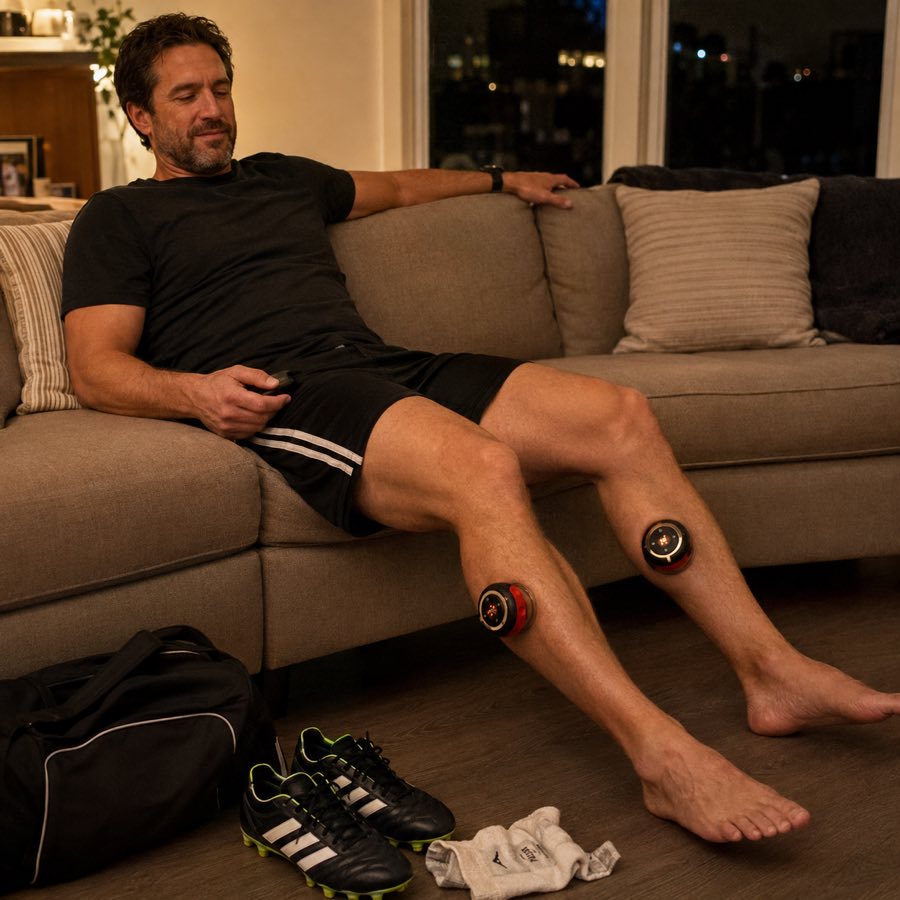
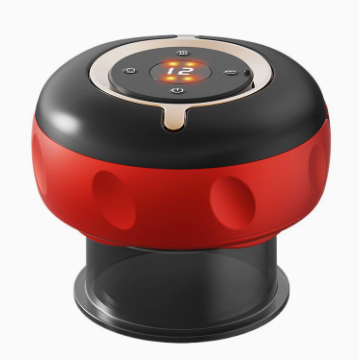
For runners who regularly notice both calves or both legs after training, the 2-SmartCup setup lets you use both sides at the same time.
Imagine the Long-Run Version
You get back Sunday morning. Maybe it was 8 miles. 10. 12. Whatever “long” currently means to you.
You’re happy with the run, but your calves feel worked. Monday or Tuesday has another session on the plan.
Instead of a floor routine and moving a massage gun from one calf to the next, you put one SmartCup on each calf. Choose a comfortable level. Sit down. Ten minutes. Coffee. Breakfast. Phone. TV. Whatever. Then move on with the day.
And That’s What Finally Answered My Biggest Question
The question wasn’t whether SmartCup was the most advanced recovery technology ever invented. It wasn’t whether it could magically remove every tight feeling. It definitely wasn’t whether it could replace sleep, good programming, nutrition, mobility and sensible training.
When I pictured the real routine—after a run, at home, shoes off, sitting down, two cups on the calves, nothing to hold or roll—my answer was: yeah. Probably.
And that may be the most important test a recovery product can pass.
The Best Recovery Tool Might Not Be the One With the Longest Feature List
It might be the one that disappears into your routine. The one you don’t have to motivate yourself to use. The one that becomes “run done, put it on” instead of “I really should do recovery tonight.”
When the problem happens three, four or five times every week, small friction adds up. Removing small friction can matter a lot.
Recovery Should Support Your Running
Not compete with it.
Running is the thing I want to spend effort on: the training, miles, discipline, early mornings and long run when I’d rather stay in bed.
Recovery? I want that to fit around everything else.
If there’s an option that gives me a different mechanical experience, that I can control, that stays in place, and that I can use while already resting, I’m interested—not because cupping is magic, but because convenience matters when you run several times every week.
KEEP THE RHYTHM GOING
Because Recovery Was Never the Goal
The next run was.
You don’t foam roll because you love foam rolling. You don’t stretch because your lifelong dream is to stretch more. You don’t buy recovery tools because your hobby is recovery.
You do it because you want to wake up and keep doing this: lace up, step outside, start the watch, run. Again and again.
THE RUN IS OVER.
RESET IN 10.
THEN GET READY FOR THE NEXT ONE.
KEEP DOING WHAT MOVES YOU.
Want to See How SmartCup Works?
See how Active Reset SmartCup works, the available setups, real customer experiences, usage guidance and the current offer.
See SmartCup Options →- First order? Get 10% off.
- Tracked shipping
- 60-Day Guarantee