
TRAINING · RECOVERY
I Haven’t Stopped Training. I Just Stopped Pretending Recovery Works Like It Did at 25.
Because after a hard session, the last thing I wanted was another 20-minute recovery routine.

The Workouts Are Still There.
And I still get slightly annoyed when someone younger than me starts lifting heavier on the rack next to mine.
So no, I didn’t wake up in my 40s and decide I was done.
If anything, training matters more to me now.
The strange part is what happens afterward.
At 25, I could train hard, sleep, and barely think about it again.
Now? I finish the workout feeling great. Then I stand up from my desk a few hours later and suddenly remember every squat I did that morning.
Or I wake up the next day and discover that putting on socks has somehow become a mobility test.
That was the part I wasn’t prepared for.
A Hard Session Started Leaving a Longer Receipt.
People joke: “Wait until you hit 40.” “Welcome to getting older.”
And maybe that’s partly true. But I never liked that explanation.
Because I didn’t feel old. I still trained. I still felt strong. I still wanted to get better.
The workout itself wasn’t the problem.
The difference was that a hard session started leaving a longer receipt afterward.
And eventually I caught myself wondering: is this how people slowly stop training the way they want to?
Not because they quit. Not because they stop caring. But because recovery gradually starts deciding what they can do next.
That bothered me. Because I have no intention of becoming the guy who says, “I used to train.”
I Already Owned Plenty of Recovery Tools.
- Foam roller
- Massage gun
- Mobility bands
- Massage balls
- Stretching videos
- Hot showers
And to be clear: a lot of that stuff worked.
The massage gun felt good when I sat there using it. The foam roller helped when I actually got onto the floor. Stretching helped. Mobility work helped.
The problem wasn’t finding something useful. The problem was what happened after training.
And at that exact moment, the last thing I wanted was: “Perfect. Now let’s spend another twenty minutes recovering.”
That’s when the foam roller stayed in the corner. The massage gun stayed in the drawer. And I told myself, “I’ll do it later.”
Later usually meant never.
I Had a Recovery-Friction Problem.
I kept asking, “What’s the best recovery tool?”
But I already owned good recovery tools.
The better question was, “What am I actually going to use when I’m tired?”
That changed everything. Because almost everything I owned required me to actively do the recovery.
Foam roller
Get on the floor
Roll
Reposition
Repeat
Massage gun
Hold
Move
Keep working
A simpler option
Place it
Set it
Sit down
I didn’t need something more intense. I needed something easier to stick with.
That’s When Cupping Caught My Attention.
I’d seen athletes with the circular marks before. But I’d always thought cupping meant going somewhere and having someone else do it.
What interested me was the basic mechanical difference.
Most of the tools I already owned worked by applying pressure into the body. A foam roller presses. A massage gun presses and percusses.
Cupping works differently. It uses controlled negative pressure to create more of a lifting sensation.
That caught my attention because it wasn’t simply another version of something already sitting in my recovery drawer.
A Different Mechanical Approach.
Different mechanics—not a claim that one approach is universally better.
The Useful Part Was What I Didn’t Have to Do.
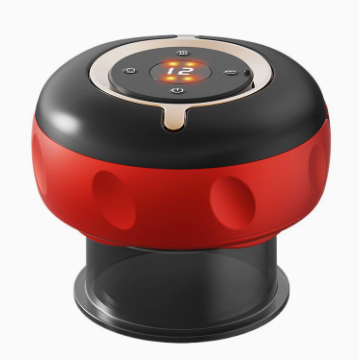
That was when I found a small electronic cupping device with adjustable suction, adjustable warmth and cordless use.
But the feature that mattered most to me wasn’t really a feature.
Place it. Choose a comfortable level. Sit down.
That sounded much closer to the kind of recovery routine I’d actually repeat.

The First Surprise Wasn’t Dramatic.
The first time I used it was after a leg session.
I’d finished training. Showered. Eaten. Sat down.
Normally that would have been the end of my recovery plan.
Instead, I placed the device on my calf. Started at a comfortable suction level. Added some warmth. Then sat on the couch.
That was it. I watched TV.
There was no dramatic movie moment where I suddenly stood up feeling 20 years younger.
What surprised me was simpler: I’d actually done something on a night when I normally would have done nothing.
Then I used it again after the next hard session. And the next one. That was when it started making sense.
The Post-Workout Routine That Fit.
- Workout
- Shower
- Food
- Place + set
- Couch
No perfect mobility routine. Not another 20 minutes on the floor. No pretending I suddenly love recovery work.
Just something simple enough that I actually repeat.
I Want to Be the Guy Who Still Does.
That’s the point. I still want to lift. Still want to get stronger. Still want to look good. Still want to feel capable.
Still want to play sports. Still want to walk into the gym and feel like I belong there.
I’m not trying to pretend I’m 25. But turning 40 doesn’t mean quietly handing over the things I enjoy.
I don’t want to become the guy who says, “I used to train.” That sentence bothers me.
I want to be the guy who still does.
THE OPTION THAT FIT AFTER TRAINING
For the Nights I’m Tired but Still Know I Should Probably Do Something.
It didn’t replace stretching. It didn’t make my massage gun useless. It didn’t replace mobility work.
It simply became the option I reach for when I’m tired but still know I should probably do something.
- 12 adjustable suction levels
- Adjustable warmth
- Cordless + rechargeable
- Hands-off once positioned
See pricing, setup options, reviews & the 60-day guarantee
A CAREFUL NOTE ON RESEARCH
What the Research Can—and Can’t—Say.
Cupping has been studied in sport and recovery settings, although outcomes and evidence quality vary.
The part that interested me wasn’t a miracle claim. It was simply that negative-pressure cupping works mechanically differently from the compression and percussion tools I already owned.
Research context
Research relates to cupping generally and is not product-specific clinical proof for SmartCup. Individual experiences vary. Persistent, unexplained or injury-related symptoms should be assessed by an appropriate healthcare professional.
QUICK QUESTIONS
Before You See the Full Training Page.
Does this replace a foam roller or massage gun?
No. Different tools provide different experiences. SmartCup is simply another option in a broader recovery routine.
Should I start at the highest suction level?
No. Start low and find a comfortable level. More intensity is not automatically better.
Can cupping leave marks?
It can temporarily leave circular marks depending on suction, duration and individual response.
Where should I use it?
Follow the product instructions and use it only on appropriate muscular areas.
Is this an injury treatment?
No. This is a recovery and wellness device and should not be positioned as treatment for injuries or medical conditions.
Where can I see pricing and the full setup?
Use the button below to view the full training product page.
READY TO LOOK CLOSER?
Want to See the Full Training Recovery Setup?
Maybe recovery doesn’t need to be harder. Maybe it just needs to be easier to actually do.
View the Full Training Recovery Page →- First order? Get 10% off.
- Free tracked US shipping
- 60-day money-back guarantee